Deep within the heart of nature lies the mesmerizing Lerakuty Cave, a geological wonder that sparks curiosity and ignites the imagination. Ever wondered how this breathtaking cavern came to be? Spoiler alert: it didn’t just pop up like a mushroom after a rainstorm!
Geological Background of Lerakuty Cave
Lerakuty Cave’s formation stems from various geological processes. Understanding these factors sheds light on the cave’s unique characteristics.
Types of Rock Formations
Limestone predominates among the rock types in Lerakuty Cave. This sedimentary rock forms from calcium carbonate, often deposited in shallow marine environments. Other formations include dolostone and sandstone, adding to the cave’s complexity. Over time, chemical processes and erosion sculpted these rocks into intricate shapes. These formations serve as a foundational element for the cave’s stunning beauty, emphasizing its geological importance.
Tectonic Activities
Tectonic activities have played a pivotal role in Lerakuty Cave’s development. Earth movements caused fractures in the crust, allowing water to infiltrate and erode the rock over millennia. These natural forces led to the cave’s expansive chambers and intricate passageways. Fault lines and shifts contribute to the cave’s structure, enhancing its appeal to geology enthusiasts. Such tectonic processes illustrate how dynamic earth movements shape landscapes over time.
The Process of Cave Formation
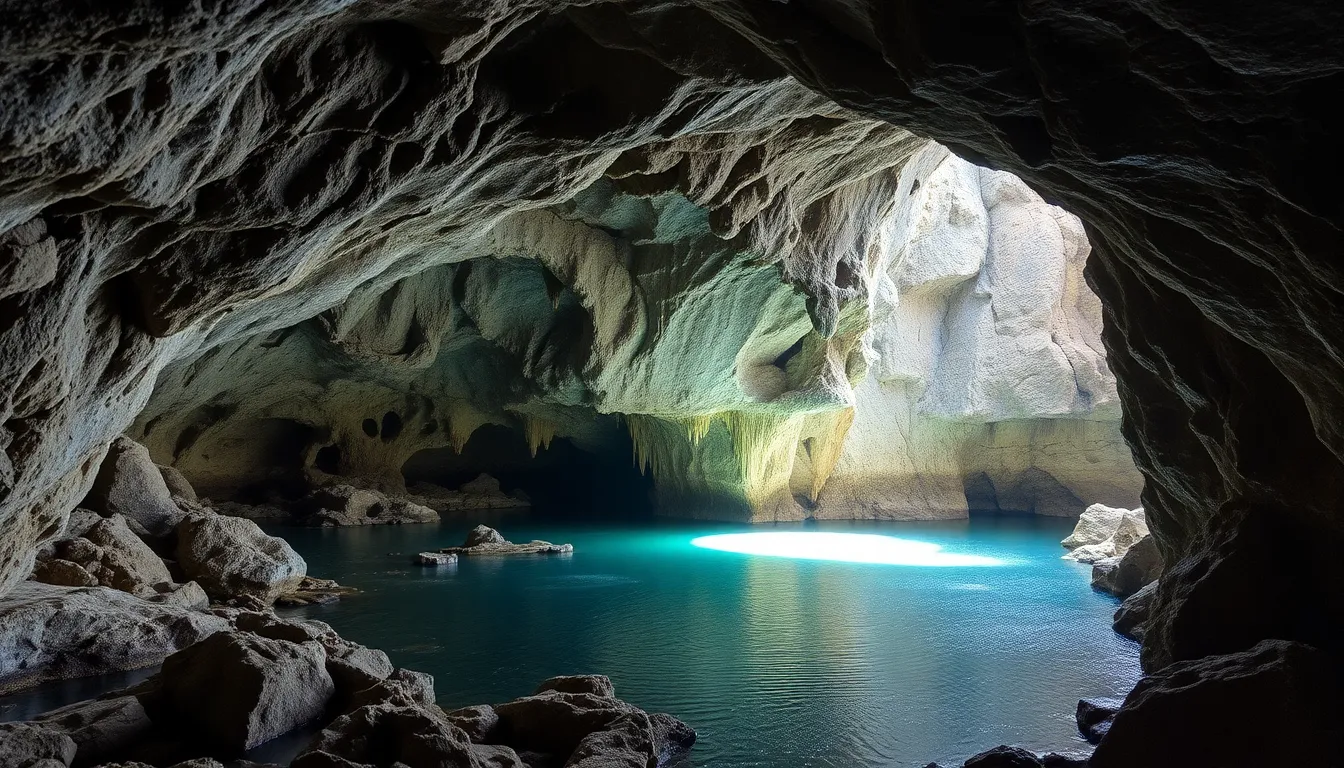
Cave formation involves intricate geological processes that create breathtaking structures. Several factors contribute to the development of Lerakuty Cave, shaping its unique features.
Erosion and Weathering
Erosion plays a crucial role in cave formation. Over time, water flows over and through limestone, dolostone, and sandstone, slowly wearing away the rock. Weathering breaks down these minerals, further assisting in the formation of passageways. Geological forces, including thermal expansion and contraction, contribute to the rock’s degradation. This combination of erosion and weathering results in enlarged gaps and chambers within the cave, providing a dramatic landscape rich in geological history.
Acidic Water Contribution
Acidic water significantly impacts cave development. Rainwater absorbs carbon dioxide as it permeates through the atmosphere, creating carbonic acid. This acid penetrates the limestone, leading to dissolution and creating cavities within the rock. The larger the cavern becomes, the more it influences groundwater flow. This process, occurring over thousands of years, facilitates the intricate designs and formations seen in Lerakuty Cave today. Understanding the effects of acidic water enhances appreciation for the cave’s formation and ongoing evolution.
Historical Significance of Lerakuty Cave
Lerakuty Cave holds notable historical importance, featuring archaeological insights and local folklore that illustrate its cultural relevance.
Archaeological Findings
Archaeological studies within Lerakuty Cave have unveiled artifacts indicating human presence dating back thousands of years. Stone tools and pottery fragments suggest ancient inhabitants utilized the cave for shelter and sustenance. Surveys conducted by researchers also highlight the cave’s role as a potential gathering place or ritual site for prehistoric communities. Findings indicate that these early societies relied heavily on the surrounding natural resources. Continued excavation efforts promise further discoveries, enriching the understanding of human history in this region.
Local Legends and Myths
Local legends surrounding Lerakuty Cave add an enchanting layer to its history. Folklore often speaks of the cave as a refuge for legendary creatures or hidden treasures. Tales recount the adventures of mythical beings who roamed the caves, shaping cultural narratives across generations. Communities share these stories, passing them down through oral traditions. Such myths enhance the cave’s mystique, drawing visitors and researchers alike. Understanding these legends fosters a deeper connection to the cave’s historical and cultural significance, revealing the relationship between nature and folklore.
Research and Exploration Efforts
Research and exploration efforts around Lerakuty Cave reveal its geological and historical significance through comprehensive studies. Scientific investigations aim to understand the cave’s formation processes and its ecosystem.
Scientific Studies
Engaging scientific studies focus on geological assessments and biological diversity within the cave. Researchers analyze mineral compositions, particularly limestone, dolostone, and sandstone, to determine how these elements interact with water. Studies of cave fauna also highlight unique species adapted to subterranean environments. By documenting these findings, scientists contribute to the broader understanding of karst systems and their ecological importance.
Cave Mapping and Preservation
Mapping efforts enhance the understanding of Lerakuty Cave’s structure and extent. Advanced technologies, such as 3D scanning and GIS, allow for detailed surveys of the cave’s passageways and chambers. Preservation initiatives ensure the protection of this natural treasure and involve monitoring environmental conditions that could threaten the cave’s integrity. Involving local communities in these efforts promotes awareness and appreciation for the cave’s geological and cultural heritage.
Conclusion
Lerakuty Cave stands as a remarkable testament to the intricate interplay of geological forces and time. Its formation, shaped by erosion and weathering, reveals the dynamic processes that have sculpted its stunning features. The cave’s historical significance adds depth to its allure, intertwining natural beauty with rich cultural narratives. Ongoing research and preservation efforts ensure that this natural wonder continues to be appreciated by future generations. Lerakuty Cave not only captivates visitors with its breathtaking formations but also serves as a vital link to the past, showcasing the enduring relationship between nature, history, and folklore.